
Premium Phosphosite-Specific 7TM Antibodies
Your Resource for GPCR Research
Select Your Country of Delivery below

Hydroxycarboxylic Acid Receptor 2 Antibodies

Close filters
No results were found for the filter!
NEW
Agonist-induced Serine326/Threonine327/Serine328 phosphorylation of the Hydroxycarboxylic Acid Receptor 2
pS326/pT327/pS328-HCA2...
Serine326/Threonine327/Serine328 (S326/T327/S328) is major phosphorylation site of the Hydroxycarboxylic Acid Receptor 2 (HCA2). The pS326/pT327/pS328-HCA2 antibody detects phosphorylation in response to agonists. S326/T327/S328...
$ 375.00 *
NEW
Agonist-induced Threonine338 phosphorylation of the Hydroxycarboxylic Acid Receptor 2
pT338-HCA2 (phospho-Hydroxycarboxylic Acid...
Threonine338 (T338) is major phosphorylation site of the Hydroxycarboxylic Acid Receptor 2 (HCA2). The pT338-HCA2 antibody detects phosphorylation in response to agonists. T338 phosphorylation is likely to be involved in efficient ligand...
$ 375.00 *
NEW
Validation of the Hydroxycarboxylic Acid Receptor 2 in transfected HEK293 cells
HCA2 (non-phospho) Hydroxycarboxylic Acid...
The non-phospho HCA2 receptor antibody is directed against the distal end of the carboxyl-terminal tail human HCA2 receptor. It can be used to detect total HCA2 receptors in Western blots independent of phosphorylation. It can also be...
$ 375.00 *
NEW
Immunohistochemical identification of the Hydroxycarboxylic Acid Receptor 2 in liver
HCA2 (IHC-grade), Hydroxycarboxylic Acid...
The non-phospho HCA2 receptor antibody is directed against the distal end of the carboxyl-terminal tail human HCA2 receptor. It can be used to detect total HCA2 receptors in Western blots independent of phosphorylation. It can also be...
$ 375.00 *
NEW
Validation of the Hydroxycarboxylic Acid Receptor 2 in transfected HEK293 cells
HCA2 (GP-non-phospho) Hydroxycarboxylic Acid...
The non-phospho HCA2 receptor antibody is directed against the distal end of the carboxyl-terminal tail human HCA2 receptor. It can be used to detect total HCA2 receptors in Western blots independent of phosphorylation. It can also be...
$ 375.00 *
NEW
Immunohistochemical identification of the Hydroxycarboxylic Acid Receptor 2 in spleen
HCA2 (GP-IHC-grade), Hydroxycarboxylic Acid...
The non-phospho HCA2 receptor antibody is directed against the distal end of the carboxyl-terminal tail human HCA2 receptor. It can be used to detect total HCA2 receptors in Western blots independent of phosphorylation. It can also be...
$ 375.00 *
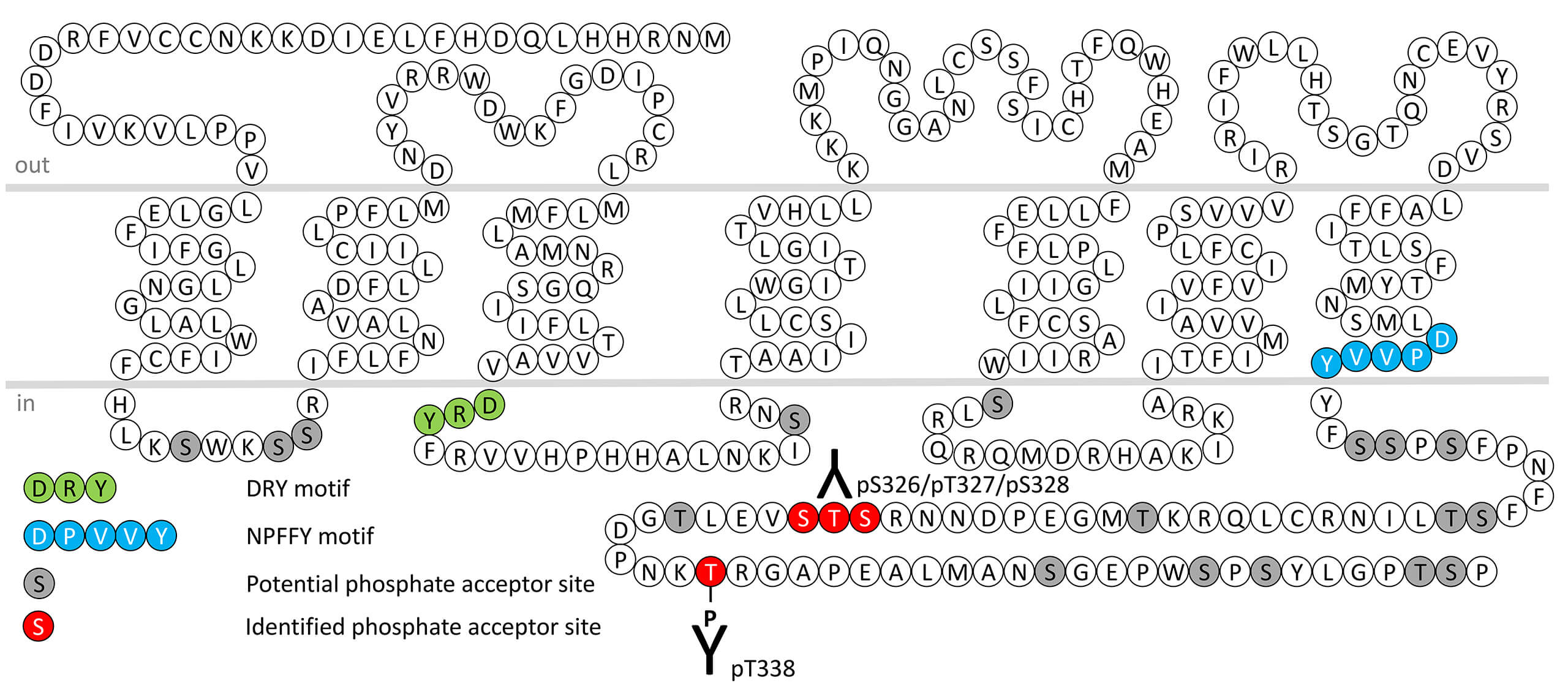
Hydroxycarboxylic acid receptor 2 (HCA₂, formerly GPR109A), encoded by HCAR2, is a class A G protein-coupled receptor activated by the endogenous ketone body β-hydroxybutyrate. It couples predominantly to Gi/o, inhibiting adenylyl cyclase and reducing intracellular cAMP. HCA₂ is expressed in adipocytes, keratinocytes, and immune cells, including macrophages, neutrophils, and epidermal Langerhans cells. In adipocytes, receptor activation suppresses lipolysis, while experimental studies link immune-cell HCA₂ signaling to anti-inflammatory responses. Niacin activates HCA₂ with higher potency than β-hydroxybutyrate and can induce cutaneous prostaglandin release, producing flushing. Agonist-induced internalization involves GRK2 and β-arrestin 2 in recombinant systems, and internalized receptors can rapidly recycle to the cell surface. Niacin and acipimox are clinically used HCA₂ agonists for selected lipid disorders. Monomethyl fumarate, the active metabolite of dimethyl fumarate, also activates HCA₂ and may contribute to some effects of fumarate-based treatments used in multiple sclerosis and psoriasis. HCA2 receptor activity is regulated by phosphorylation of carboxyl-terminal serine326/threonine327/serine328 (pS326/pT327/pS328-HCA2) and threonine338 (pT338-HCA2). For more information on HCA2 receptor pharmacology please refer to the IUPHAR database. For further reading refer to:

Offermanns S, Colletti SL, Lovenberg TW, Semple G, Wise A, IJzerman AP. International Union of Basic and Clinical Pharmacology. LXXXII: Nomenclature and Classification of Hydroxy-carboxylic Acid Receptors (GPR81, GPR109A, and GPR109B). Pharmacol Rev. 2011 Jun;63(2):269-90. doi: 10.1124/pr.110.003301. Epub 2011 Mar 31. PMID: 21454438.

Colletti SL, IJzerman AP, Lovenberg TW, Offermanns S, Semple G, Waters MG, Wise A. Hydroxycarboxylic acid receptors in GtoPdb v.2023.1. IUPHAR/BPS Guide to Pharmacology CITE. 2023; 2023(1).

Hydroxycarboxylic acid receptor 2 (HCA₂, formerly GPR109A), encoded by HCAR2 , is a class A G protein-coupled receptor activated by the endogenous ketone body β-hydroxybutyrate. It couples... read more »
Close window
Hydroxycarboxylic Acid Receptor 2 Antibodies

Hydroxycarboxylic acid receptor 2 (HCA₂, formerly GPR109A), encoded by HCAR2, is a class A G protein-coupled receptor activated by the endogenous ketone body β-hydroxybutyrate. It couples predominantly to Gi/o, inhibiting adenylyl cyclase and reducing intracellular cAMP. HCA₂ is expressed in adipocytes, keratinocytes, and immune cells, including macrophages, neutrophils, and epidermal Langerhans cells. In adipocytes, receptor activation suppresses lipolysis, while experimental studies link immune-cell HCA₂ signaling to anti-inflammatory responses. Niacin activates HCA₂ with higher potency than β-hydroxybutyrate and can induce cutaneous prostaglandin release, producing flushing. Agonist-induced internalization involves GRK2 and β-arrestin 2 in recombinant systems, and internalized receptors can rapidly recycle to the cell surface. Niacin and acipimox are clinically used HCA₂ agonists for selected lipid disorders. Monomethyl fumarate, the active metabolite of dimethyl fumarate, also activates HCA₂ and may contribute to some effects of fumarate-based treatments used in multiple sclerosis and psoriasis. HCA2 receptor activity is regulated by phosphorylation of carboxyl-terminal serine326/threonine327/serine328 (pS326/pT327/pS328-HCA2) and threonine338 (pT338-HCA2). For more information on HCA2 receptor pharmacology please refer to the IUPHAR database. For further reading refer to:

Offermanns S, Colletti SL, Lovenberg TW, Semple G, Wise A, IJzerman AP. International Union of Basic and Clinical Pharmacology. LXXXII: Nomenclature and Classification of Hydroxy-carboxylic Acid Receptors (GPR81, GPR109A, and GPR109B). Pharmacol Rev. 2011 Jun;63(2):269-90. doi: 10.1124/pr.110.003301. Epub 2011 Mar 31. PMID: 21454438.

Colletti SL, IJzerman AP, Lovenberg TW, Offermanns S, Semple G, Waters MG, Wise A. Hydroxycarboxylic acid receptors in GtoPdb v.2023.1. IUPHAR/BPS Guide to Pharmacology CITE. 2023; 2023(1).

Recently viewed