

No results were found for the filter!
NEW
 pT351-LPA1 (phospho-Lysophosphatidic Acid...
 Threonine351 (T351) is major phosphorylation site of the Lysophosphatidic Acid Receptor 1 (LPA1). The pT351-LPA1 antibody detects phosphorylation in response to agonists. T351 phosphorylation is likely to be involved in efficient ligand...
$ 375.00 *
NEW
 pS344/pS346/pS347-LPA1...
 Serine344/Serine346/Serine347 (S344/S346/S347) is major phosphorylation site of the Lysophosphatidic Acid Receptor 1 (LPA1). The pS344/pS346/pS347-LPA1 antibody detects phosphorylation in response to agonists. S344/S346/S347...
$ 375.00 *
NEW
 pT338/pS341-LPA1 (phospho-Lysophosphatidic Acid...
 Threonine338/Serine341 (T338/S341) is major phosphorylation site of the Lysophosphatidic Acid Receptor 1 (LPA1). The pT338/pS341-LPA1 antibody detects phosphorylation in response to agonists. T338/S341 phosphorylation is likely to be...
$ 375.00 *
NEW
 LPA1 (GP-non-phospho), Lysophosphatidic Acid...
 The non-phospho-LPA1 receptor antibody is directed against the distal end of the carboxyl-terminal tail of human LPA1. It can be used to detect total LPA1 receptors in Western blots independent of phosphorylation. The LPA1 antibody can...
$ 375.00 *
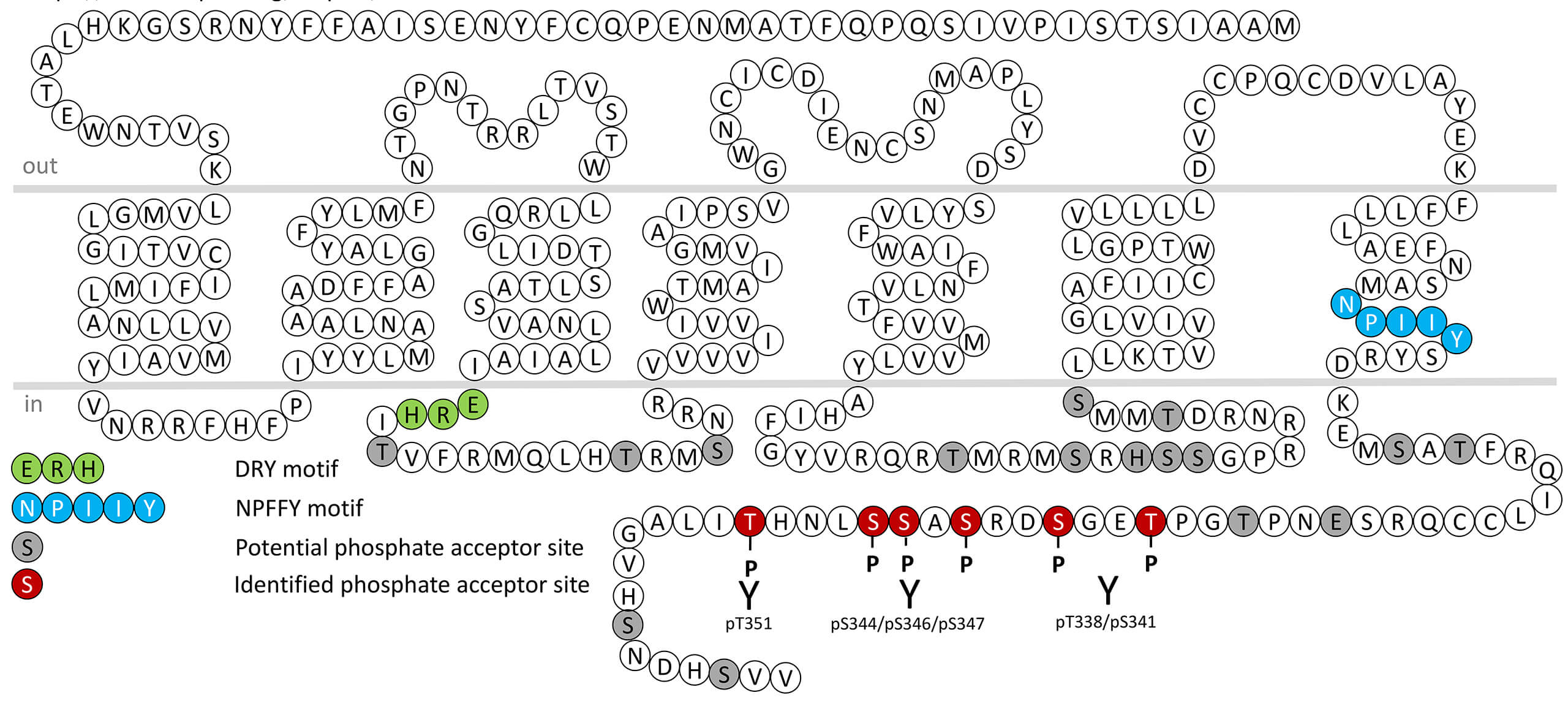 The lysophosphatidic acid receptor 1 (LPA₁), encoded by the LPAR1 gene, is a class A G protein–coupled receptor (GPCR) that mediates cellular responses to the bioactive lipid lysophosphatidic acid (LPA). Pharmacologically, LPA₁ couples to multiple G proteins—including Gi/o, Gq/11, and G12/13—activating downstream signaling pathways such as RhoA, phospholipase C (PLC), MAPK/ERK, and PI3K/Akt, which regulate cell proliferation, migration, survival, and cytoskeletal dynamics. LPA₁ is widely expressed across tissues, with high levels in the developing and adult brain, lung, kidney, reproductive organs, and fibroblasts, reflecting its broad physiological roles. Functionally, LPA₁ is crucial for embryonic development, particularly in neuronal differentiation, vascular formation, and myelination, as shown by developmental abnormalities in Lpar1 knockout mice. In adults, LPA₁ contributes to wound healing, fibrosis, pain transmission, and immune cell recruitment, and its dysregulation has been implicated in fibrotic diseases, neuropathic pain, cancer progression, and neuropsychiatric disorders. Pharmacological antagonists such as AM095 and BMS-986020 have been developed to inhibit LPA₁ signaling, showing promise in idiopathic pulmonary fibrosis and other fibrotic conditions. The receptor’s ability to respond to lipid mediators links it to metabolic and inflammatory networks. Overall, LPA₁ acts as a key lipid-sensing receptor governing cellular motility, survival, and tissue remodeling, and remains an important therapeutic target in fibrosis, inflammation, and cancer. For more information on LPA1 pharmacology please refer to the
 Recently viewed